Sê o primeiro a adicionar este livro aos favoritos!
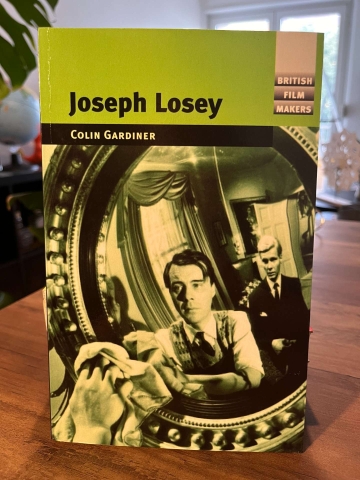
Joseph Losey (1909-84) was onde described as "the greatest poet of mirrors, greater even than Cocteau, because he knows they are environments in their own right, accepting, changing, and never quite giving back the world the reflect". During a career spanning over four decades, Losey directed a series of seminal British films - Time without Pity, Eve, The Servant, Secret Ceremony and The Go Between - that mark him as one of the cinema's greatest baroque stylists.
The Wisconsin-born Losey, also led another, more controversial life. A self-proclaimed Marxist and veteran of the 1930s Soviet agit-prop theatre, he collaborated with German playwright Bertolt Brecht before directing several Hollywood film noir B-pictures, including a remake of Fritz Lang's M. Not surprisingly he was also a victim of McCarthyism and the Hollywood black-list. Losey's British films are therefore not just an outsider's view of a class bound society in crisis, they are also reflections of exile, attempts to repair the disjuncture of personal and historical continuity through a new cinematic style rooted in the burgeoning European art house tradition, exemplified by directors such as Antonioni, Resnais and Godard.
Employing recent interdisciplinary methodologies derived from Cultural Studies and poststructural theory, the book explores and clarifies the films' uneasy tension between issues of class and gender (the Brechtian dialectician) and their more baroque explorations of fractured temporality (the Nietzschean 'poet of mirrors'). Of interest to students and film enthusiasts alike, this is the first full-lenght critical analysis of Losey's British films in the context of his entire career.
Peso do livro: cerca de 427gr
Sobre o/a vendedor/a