
Clica na imagem para veres mais fotos do livro.

Este livro está na lista de favoritos de 1 utilizadores.
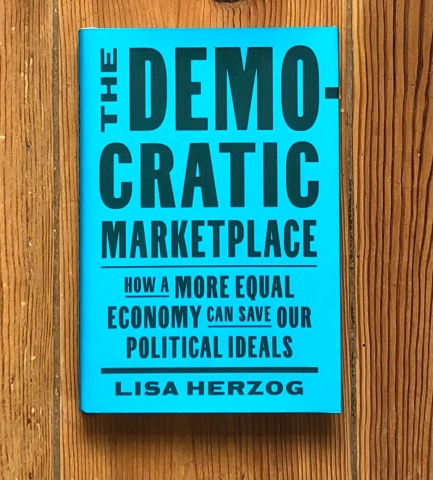
Democracy has been hollowed out by capitalism. A narrow view of markets and their aims—prioritizing efficiency, profit, and growth—now dominates thinking about democracy itself. Citizens are ignorant of the deep principles of self-governance, having long since adopted a facile equation between democracy and voting as a consumer choice. Lisa Herzog argues that democracy is still possible, but only if democratic values get embedded in everyday experience—including economic experience. That requires new ways of thinking about markets and their goals.
The Democratic Marketplace theorizes the foundational structures of a democratic economy, in which markets are not just tools for maximizing profit via exploitation and extraction. To this end, employees are empowered to participate in corporate governance. Economic disparities are curbed so that citizens can negotiate their inevitable differences on a truly equal footing. And while a democratic economy need not eschew growth, it does renounce today’s growth-at-all-costs expectations, instead balancing growth with goals like ecological sustainability and the preservation of time outside of work. Democratic economics also entails implementing reforms in ways that take seriously the perspectives, experiences, and skills of the whole population.
Sobre o/a vendedor/a